Idan here from Cushion Corner. Here's the one tip I'd give anyone ordering new cushions:
measure the furniture frame, not the old cushions.
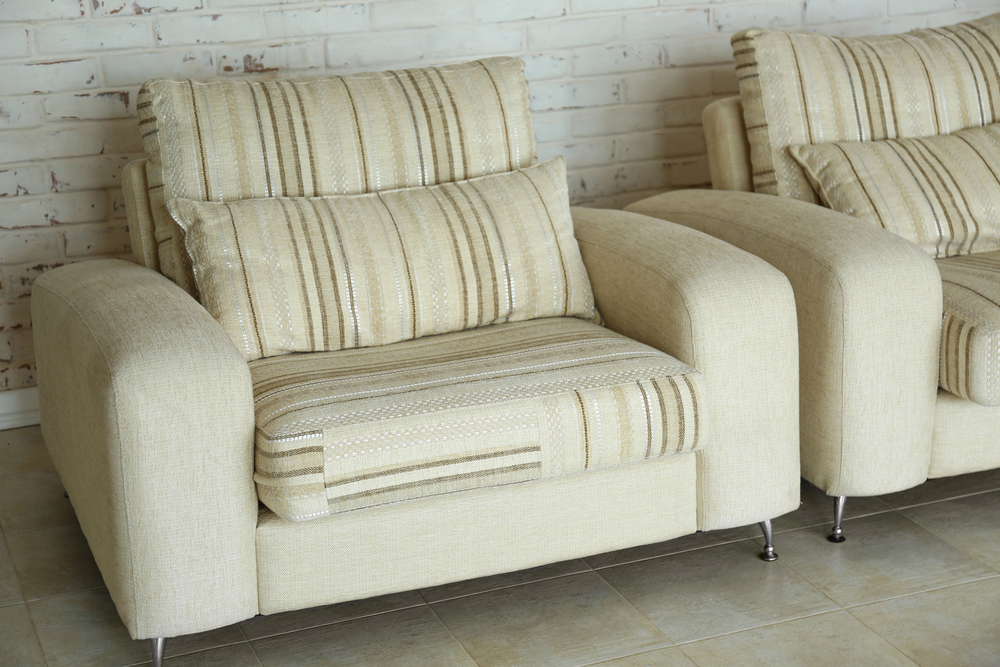
Old cushions have lived a life. Foam gets flattened, covers stretch, corners round off, and the whole thing slumps out of shape. Copy that, and you're ordering a brand-new version of its wear and tear. The frame doesn't change. It's the actual space your new cushion needs to fill.
All you need is a tape measure, something to write on, and a few minutes per seat.
How to Measure the Frame
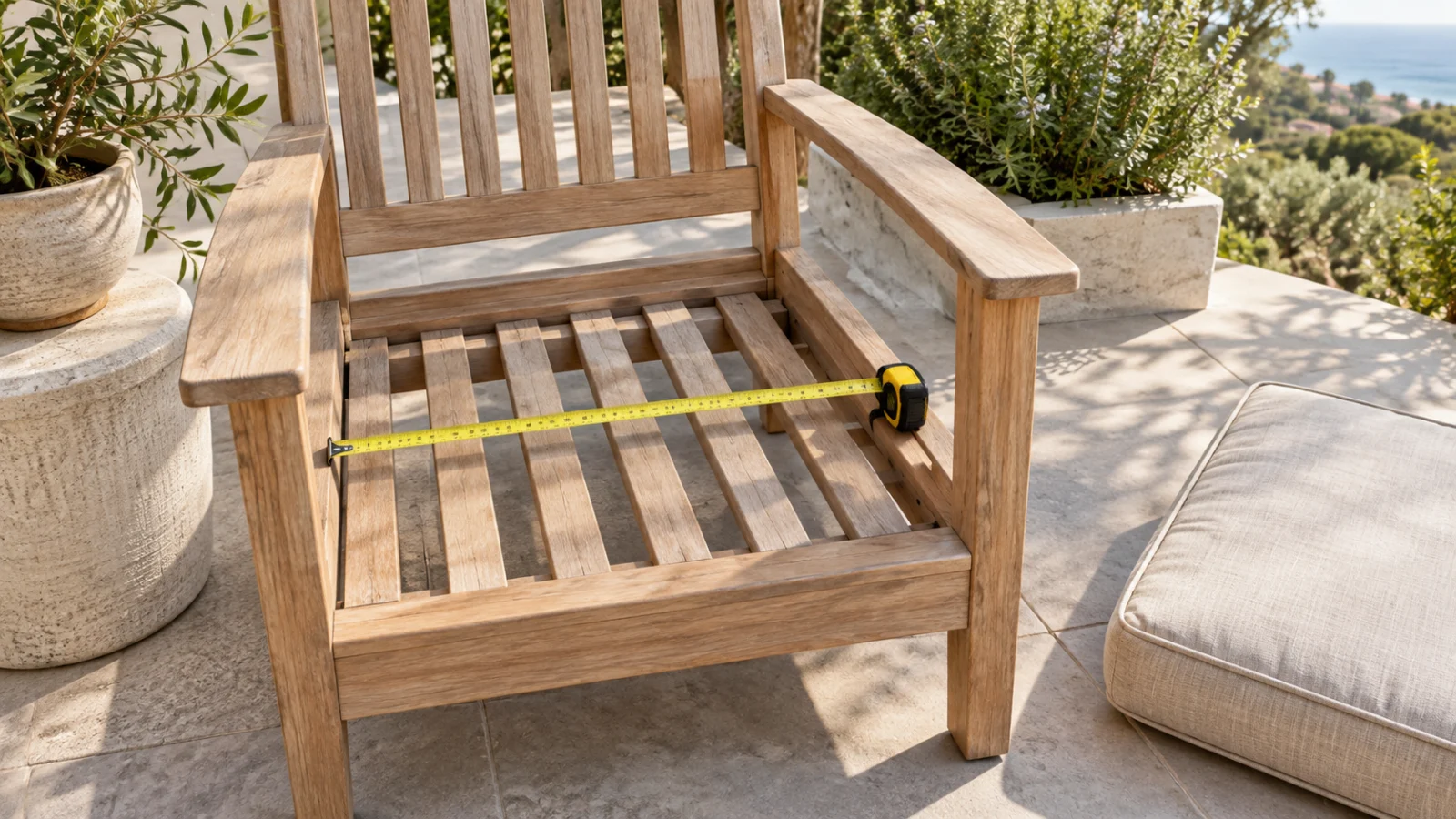
- Take the old cushions off. You want a clear look at the bare seat and back.
- Measure seat width at the front and the back. Go from inside arm to inside arm (or edge to edge on armless pieces). Many frames taper, so one measurement isn't enough.
- Measure seat depth. Front edge of the frame to the back. On deep seating, note whether the back cushion sits on top of or in front of the seat cushion.
- Measure back height. From the seat to the top of the frame back, or wherever you want the back cushion to end. If it rests on the seat cushion, that thickness eats into the height.
- Decide on thickness. Measure from the seat deck to the top of the arms to see how much room you have, then think about how high you want to sit. Dining chair pads are much thinner than deep seating cushions.
- Check corners and notches. Square or rounded corners? Arm or back posts cutting into the seat? Note where you'll need a rounded corner or a notch.
- Note tie placement. Figure out what each tie wraps around (a rail, post, or slat) and measure from the corner of the cushion area to the center of each tie point.
- Measure each seat separately. Even matching sets vary. Label them (Chair 1, Left Sofa Seat, and so on).
T-Cushions, Notches, and Curves
T-cushions:
Measure the full front width, the width between the arms, the total depth, and the depth of the wide front section (front edge to where the arms begin).
Notches:
Measure each notch's width and depth, plus its distance from the nearest corner.
Curves or odd shapes:
Make a paper template. Tape paper over the seat, trace the frame edges, mark notches, posts, and ties, label front, back, and top side, then cut it out and test fit. Once it sits right, measure it flat.
Really unusual shape? Reach out and we'll figure it out together.
When Measuring the Old Cushion Still Works
If your cushion still holds its shape, has a snug cover, and fits your furniture well, it's a fine reference. Measure seam to seam (not across the puffy middle) and check thickness at the side panel.
If the cushion and the frame disagree, trust the frame.
Common Mistakes
- Copying a squished old cushion. You'll likely end up too small or too thin.
- Measuring one chair from a set. Measure them all.
- Only measuring the front width. Check the back for a taper.
- Mixing up width and depth. Width is side to side; depth is front to back.
- Skipping notches and ties. That's the difference between "fits" and "fits perfectly."
Measure twice, sit once.
Ready When You Are
Once you have your numbers, head to our custom cushion configurator to enter your measurements and choose your shape, fabric, and insert. We're happy to send free fabric swatches so you can see and feel them before you decide.
Stuck on sizing, foam, or fabric, or want a second set of eyes on your numbers? Get in touch for a free quote or call us at (805) 285-0635.
Need inspiration first? Browse our project gallery.
No pressure either way.
Cheers,
Idan
Cushion Corner