Hi, I'm Idan. My family has been making custom outdoor cushions in Simi Valley since 1997, and we make covers for patio furniture too. A lot of people ask whether covers are worth it and what to look for. Here's my honest take, with no sales pitch. Okay, maybe a small one at the end.
Why cover patio furniture at all?
Even in sunny Southern California, outdoor furniture collects dust, leaves, pollen, bird droppings and the occasional winter storm. Sunbrella's care guidance says to use protective covers when furniture isn't in use, and to keep fabrics from sitting wet. A good cover means less scrubbing, and your cushions and frames stay ready to use.
Breathable covers vs. plastic tarps
A plastic tarp keeps rain off, but it also traps humidity underneath. Damp air plus dirt is exactly where mildew starts. Look for a cover that is water-resistant but breathable, so rain runs off and moisture can still escape.
We make our covers from the Surlast Collection. Surlast comes from Glen Raven, the same company behind Sunbrella. Glen Raven describes it as a 100% solution-dyed polyester with a water-repellent finish, high UV resistance and mold-and-mildew resistance.
Fit matters more than you'd think
One-size-fits-most covers sound convenient until the wind shows up.
- Too loose: the wind gets under it and it turns into a sail. Loose fabric also sags into dips where rainwater pools, and pooled water adds weight and holds moisture against your furniture.
- Too tight: the seams are under constant strain, and the cover is a wrestling match every time you put it on or take it off.
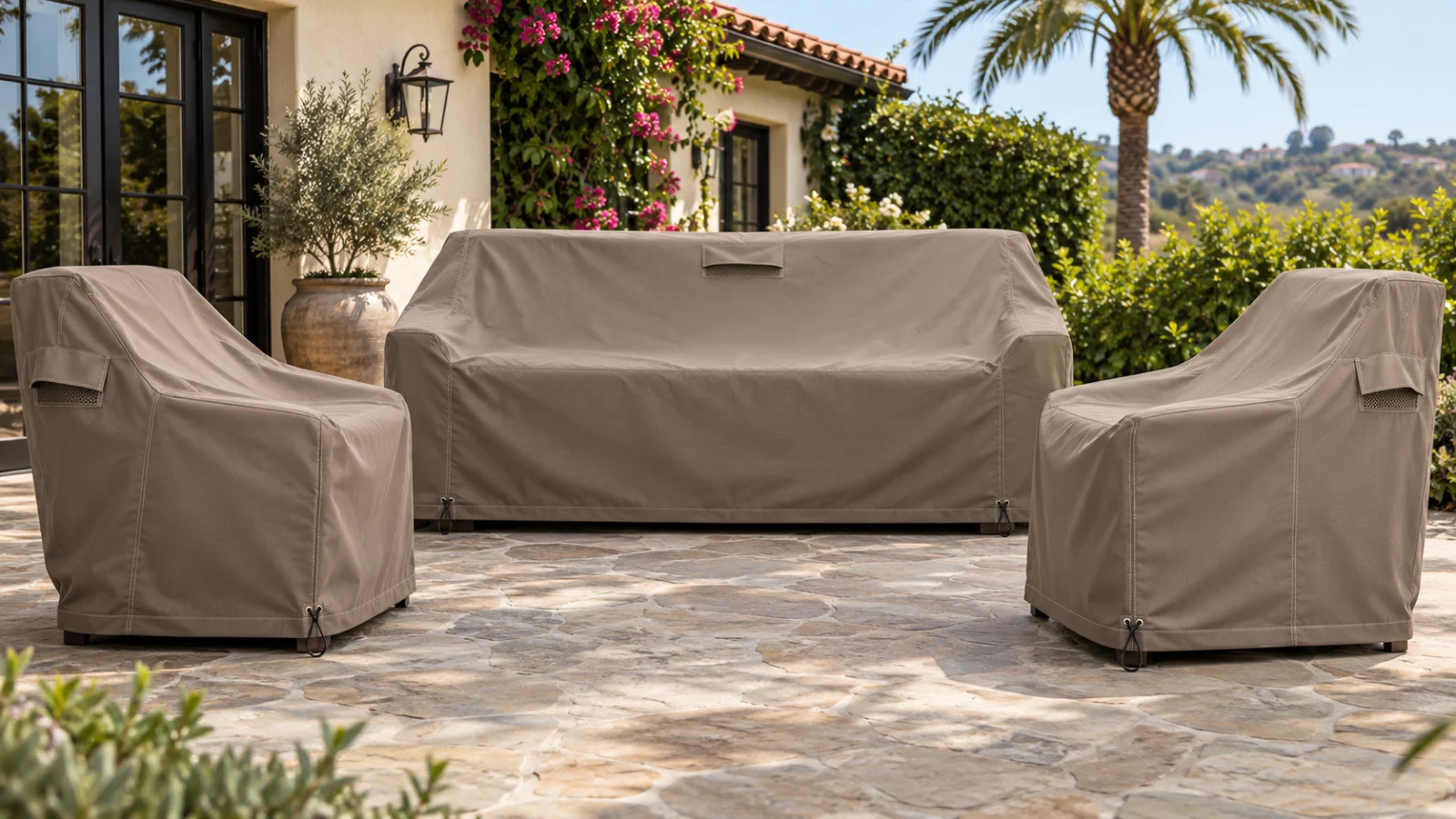
- Just right: it follows the shape of the piece, sheds water and stays put.
That's why every cover we make is made to measure for that particular set.
What to measure
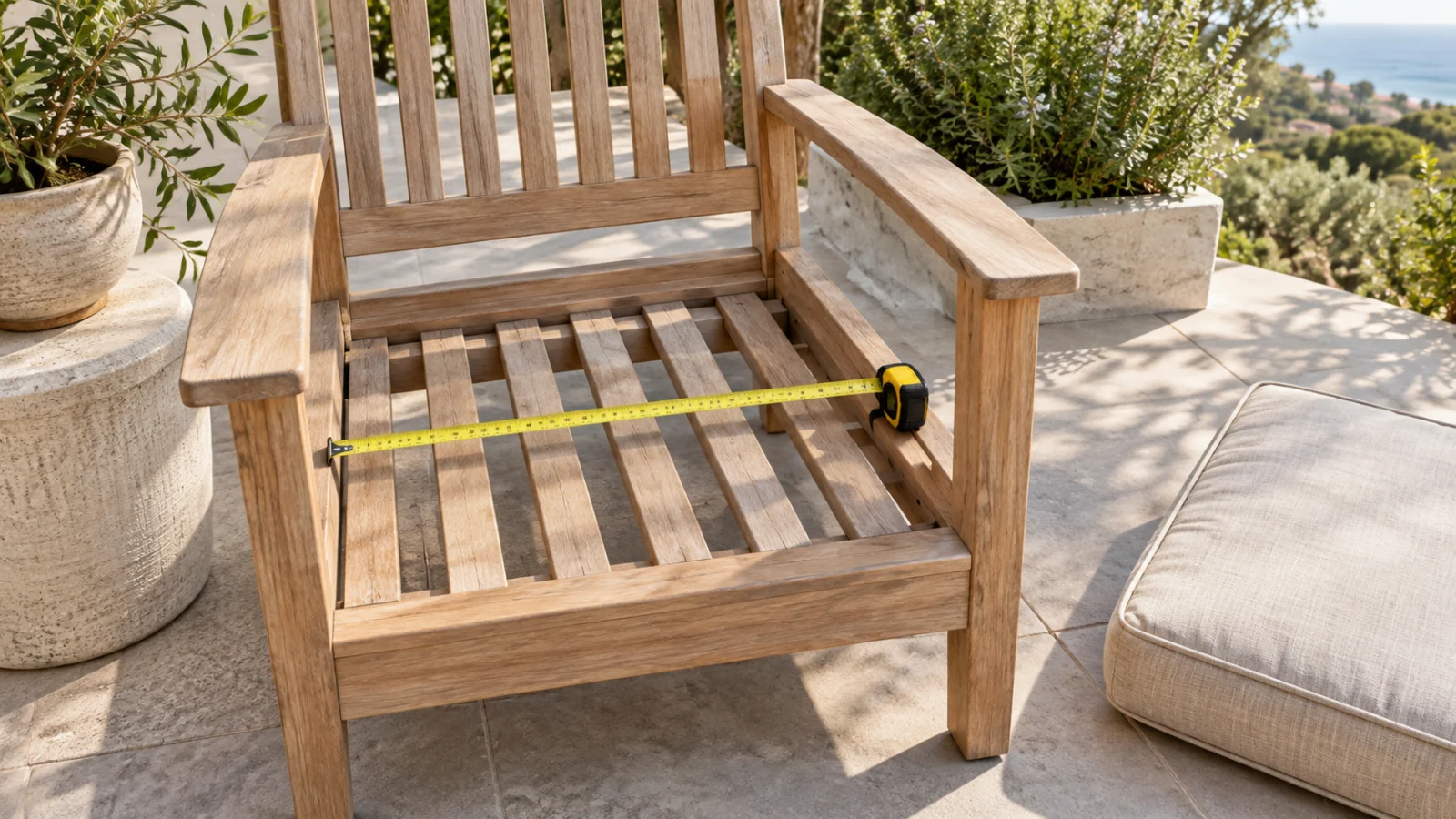
Measure the furniture itself, not the cushions sitting on it:
- Width: at the widest point, usually the arms
- Depth: front to back, at the deepest point
- Height: from the ground to the top of the back (for chairs and sofas, also note the arm height)
- Anything unusual: sectional corners, curved backs, umbrella holes or a fire pit table
If you've measured for cushions before, it's the same idea: start with the frame. Our guide on how to measure for outdoor cushions (start with the frame) walks through the basics.
Dry first, then cover, and let it breathe
- Cover only dry furniture. Sunbrella's care guide says to make sure fabrics are dry before covering them. Moisture trapped under a cover has nowhere to go.
- Vent it. If your cover has vents, keep them clear. If it doesn't, leaving a small gap at the bottom lets air circulate.
- Check it after storms. Brush off pooled water and debris, and air things out on the next sunny day.
Tie it down
Here in Simi Valley, the Santa Ana winds love a loose cover. Ours usually come with drawcords, which you can cinch around the base so the wind can't get underneath. If you'd like vents, buckles or something else, just ask. We can add features on request.
Cushions: cover them in place or bring them inside?
- Short breaks and mild weather: leaving cushions on the furniture under a good, well-fitted cover is usually fine.
- Long rainy stretches or freezing winters: bring the cushions inside to a dry, well-ventilated spot, and cover just the frames. Make sure the cushions are clean and fully dry first.
Covers for year-round SoCal patios
Lots of us here use our patios twelve months a year, so covers aren't only a winter thing. Covering furniture between uses keeps dust, ash and bird droppings off. When friends come over, pull it off and sit down.
Want a cover that fits your set?
We make covers for patio furniture, plus custom cushions in Sunbrella, Tempotest and Outdura. Send us your measurements and a few photos of your set through our contact page, and we'll send you a free quote. No pressure. We just like helping people keep their patios in good shape. Consider it something we've got covered.
Idan, Cushion Corner